Max Speed Explained: What It Means for Electric Bikes
As an Amazon Associate we earn from qualifying purchases. Links on this page are affiliate links.
Max Speed Explained For E-Bikes
The max speed explained is the highest velocity an electric bike can reach under its own power. This figure defines the limits of your ride. It is not a suggestion. It is a hard cap set by the motor controller. When you hit that limit, the motor cuts out. You must pedal harder to go faster. This feature is critical for legal compliance and safety.
Most standard Class 1 and Class 2 e-bikes top out at 20 MPH. This speed is common for city commuting and light trails. It balances efficiency with regulatory ease. Some models offer a max speed of 25 MPH. This is the standard for Class 3 e-bikes in many regions. It allows for quicker travel on bike lanes. A few specific models reach 24 MPH or 28 MPH. These slight variations often depend on local regulations or specific motor tuning.
Higher performance tiers exist for different needs. Certain utility or off-road bikes list a max speed of 30 MPH. These are often unregulated or fall into specific legal categories. You might also encounter models with a max speed of 38 MPH. These are typically mid-drive systems designed for hilly terrain. Some powerful e-bikes reach 45 MPH. This requires robust brakes and tires. The fastest category includes bikes with a max speed of 50 MPH. These behave more like mopeds. They often require helmets and registration.
Why does this matter to you? Speed affects range. Higher speeds drain the battery faster. It also impacts braking distance. You need adequate stopping power for higher caps. Check the listing carefully. Sellers may list top speed differently. Look for the specific motor cutoff value. This number tells you exactly when assistance ends. Understanding this spec helps you choose the right bike for your legal environment and riding style. Always verify local laws before buying a faster model.
Max Speed Options Compared
20 MPH
This speed aligns with Class 1 and Class 2 e-bike regulations in many regions. It ensures you remain in the bicycle lane on most trails and roads. The LELEKUAI T6 offers this limit. It prioritizes stability and off-road control over velocity. You gain legal simplicity and wider access to bike paths. The trade-off is lower cruising efficiency on flat, paved surfaces. This speed is ideal for casual riders who value safety and compliance over quick commutes.
25 MPH
This limit defines Class 3 e-bikes in the United States. It allows for faster urban commuting without entering motor vehicle lanes. The Heybike Ranger 2.0 operates at this speed. It suits commuters who need to cover distance efficiently. You benefit from quicker travel times on flat terrain. The trade-off involves stricter age restrictions and potential helmet requirements in some areas. This speed balances utility and speed for daily urban travel.
28 MPH
This speed exceeds standard Class 3 limits but remains manageable for most riders. The TS TST GRP X6 provides this capability. It is designed for riders who need extra torque for steep hills. You gain better momentum on inclines without pedaling as hard. The trade-off is that some local laws may restrict this speed on public bike paths. It is a practical choice for hilly terrain where extra power helps maintain pace.
30 MPH
This speed offers a noticeable jump in performance for rougher terrain. The ESKUTE V100Pro delivers this velocity. It suits riders who want more power on off-road paths. You cover ground faster on uneven surfaces. The trade-off is increased energy consumption and reduced range. This speed is best for those who prioritize performance on trails over long-distance efficiency. It requires a bike built to handle the higher stress.
38 MPH
This speed is typical for high-power fat tire models. The Jasion RetroVolt Pro operates near this limit. It is designed for riders who need serious power. You achieve fast speeds on rough terrain. The trade-off is reduced maneuverability and higher weight. This speed is not suitable for narrow bike lanes. It is a specialized tool for those who need to move quickly over long, open, or rough paths.
50 MPH
This is the highest speed in this comparison. The DTTZH model reaches this limit. It is a high-performance machine for off-road or closed-course use. You gain extreme speed and torque. The trade-off is very high energy consumption and limited range. This speed is not for commuting. It is for riders who prioritize raw power and speed above all else. It requires advanced riding skills and strict safety precautions.
Who Needs Higher Speeds
Who needs it
You need higher max speeds if your daily commute covers long distances across flat terrain. Riders who choose 25 MPH or 28 MPH options often prioritize efficiency over agility. A faster top speed reduces travel time significantly. You will cover more ground with less effort. This matters if you are replacing a car for short trips. The 30 MPH and 37 MPH brackets serve those who want road bike-like velocities. If you frequently ride on multi-use paths with higher speed limits, these models fit better. The 45 MPH and 50 MPH tiers are for specialized use. They suit riders who need rapid transit on private roads or designated tracks. These speeds require more robust braking systems and stability. You must be comfortable handling higher velocities. If you value time savings and can manage the increased kinetic energy, a higher max speed spec is a practical choice for your routine.
Who can skip it
You can skip high max speed specs if you ride in dense urban areas with frequent stops. Speed offers little benefit when you are navigating traffic lights and pedestrians. The 20 MPH and 24 MPH options are often sufficient for these environments. You should prioritize comfort and battery range instead. A slower bike often has better ergonomics for short hops. Focus on suspension quality and tire width for pothole-prone streets. If you carry heavy cargo, lower speeds provide better control and safety. You do not need 30 MPH or higher if your trips are under five miles. Prioritize torque for hill climbing rather than top-end velocity. A robust motor controller that handles inclines well is more valuable than a fast flat speed. Also, consider local regulations. Many areas restrict speeds above 20 or 28 MPH on public roads. Choosing a compliant model avoids legal issues. Your safety and ease of use matter more than reaching extreme velocities.
Key E-Bike Speed Terms
Max Speed
The highest velocity the motor provides. It is a hard limit set by the controller. You cannot exceed this number using pedal power alone.
Motor Power
Measured in watts, this indicates strength. Higher wattage helps you reach max speed faster and climb hills with less effort.
Class 1
Pedal-assist only with a 20 mph limit. The motor stops helping once you reach that speed. You must keep pedaling to maintain motion.
Class 2
Includes a throttle for throttle-only riding. The max speed is usually 20 mph. You do not need to pedal to reach this limit.
Battery Voltage
System pressure, measured in volts. Higher voltage can help sustain max speed under load. Common levels are 36V or 48V for e-bikes.
Battery Capacity
Energy storage, measured in watt-hours. It determines range, not top speed. A larger capacity keeps the motor running longer at high speeds.
Motor Controller
The brain regulating power flow. It cuts off electricity when max speed is reached. It protects the motor from overheating during sustained high speeds.
Quick picks
| # | Product | Best for | Price |
|---|---|---|---|
| 1 | LELEKUAI 26" 350W Mountain E-Bike | off-road trail riding and stable handling | Check price of LELEKUAI 26" 350W Mountain E-Bike on Amazon |
| 2 | Heybike Ranger 2.0 500W Folding Fat Tire E-Bike | Urban commuters needing portable stability | Check price of Heybike Ranger 2.0 500W Folding Fat Tire E-Bike on Amazon |
| 3 | TS TST GRP X6 20" Fat Tire Ebike | off-road trails and steep hill climbing | Check price of TS TST GRP X6 20" Fat Tire Ebike on Amazon |
| 4 | ESKUTE V100Pro Fat Tire Ebike | Riders needing 30 MPH on rough terrain | Check price of ESKUTE V100Pro Fat Tire Ebike on Amazon |
| 5 | DTTZH 5000W 60V 30Ah 20-Inch Fat Tire E-Bike | High-speed off-road and moped-style riding | Check price of DTTZH 5000W 60V 30Ah 20-Inch Fat Tire E-Bike on Amazon |
| 6 | Jasion RetroVolt Pro Fat Tire E-Bike | long-range rides on rough terrain | Check price of Jasion RetroVolt Pro Fat Tire E-Bike on Amazon |
Our 6 picks

LELEKUAI 26" 350W Mountain E-Bike
Best for: off-road trail riding and stable handling
- Max Speed
- 20 MPH (what this guide is about)
- Motor Power
- 350W
- Battery Capacity
- 13Ah
- Battery Voltage
- 48V
- Maximum Range
- 50 Miles
- Top Speed
- 20MPH
View on Amazon: LELEKUAI 26" 350W Mountain E-Bike Affiliate link
The LELEKUAI T6 is a 26-inch mountain e-bike built for adults and teens. It features a 350W peak motor and a 48V 13Ah removable battery. The bike tops out at 20 MPH with an estimated range of 50 miles. Weighing 50 pounds, it is designed for all-terrain use. This model suits riders who prioritize stability and off-road capability over high speed.
Pros
- 26-inch wheels provide stable handling on varied terrain
- 48V 13Ah removable battery allows for convenient charging
- 350W peak motor offers reliable power for mountain trails
- 50-mile range supports longer rides without frequent recharging
Cons
- 20 MPH top speed is lower than many competitors in this list
- 50-pound weight makes the bike heavier to maneuver
- 13Ah battery capacity is smaller than other models listed
Good fit if
- You prefer stable 26-inch wheels for off-road riding
- You want a removable battery for easy charging
- You prioritize mountain terrain capability over high speed
Skip if
- You need speeds above 20 MPH for commuting
- You prefer lighter bikes for easy lifting
- You want a larger battery for extended range
Verdict: LELEKUAI T6 26" Mountain E-Bike fits riders who value off-road stability and removable battery convenience over top speed. It is a practical option for trail use rather than high-speed commuting.

Heybike Ranger 2.0 500W Folding Fat Tire E-Bike
Best for: Urban commuters needing portable stability
- Max Speed
- 25 MPH (what this guide is about)
- Motor Power
- 500W
- Battery Capacity
- 15Ah
- Battery Voltage
- 48V
- Maximum Range
- 55 miles
- Top Speed
- 25 mph
View on Amazon: Heybike Ranger 2.0 500W Folding Fat Tire E-Bike Affiliate link
The Heybike Ranger 2.0 is a folding step-thru e-bike with 20-inch fat tires. It features a 500W motor and a 48V 15Ah battery, reaching a top speed of 25 mph. The design prioritizes comfort with an oversized seat and dual suspension. It offers a 55-mile range and includes integrated lights for safety. This model suits riders needing portability and stability on varied surfaces.
Pros
- 25 mph top speed for efficient commuting
- 20 x 4 inch fat tires for stability
- Foldable step-thru frame for easy storage
- 48V 15Ah battery supports 55-mile range
Cons
- 500W motor is less powerful than 2000W+ options
- 20-inch wheels offer less rollover ability than 26-inch models
- Single shock absorber limits suspension compared to dual systems
Good fit if
- You need a folding bike for apartment storage
- You prefer a step-thru frame for easy mounting
- You ride on mixed terrain like sand or mud
Skip if
- You require speeds above 25 mph
- You want a high-power motor for steep hills
- You need full dual suspension for rough trails
Verdict: Heybike Ranger 2.0 20" Fat Tire Ebike fits urban commuters who value storage space and stable handling over raw speed or heavy-duty off-road performance.
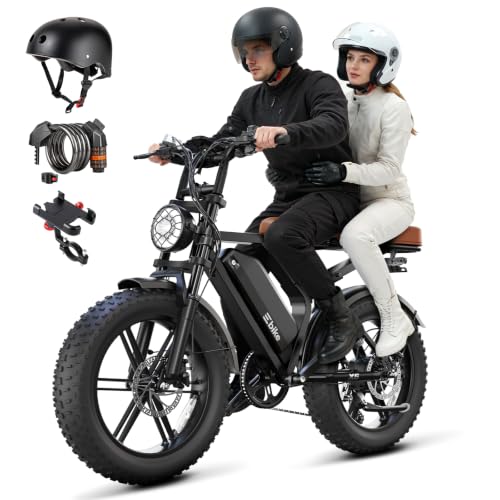
TS TST GRP X6 20" Fat Tire Ebike
Best for: off-road trails and steep hill climbing
- Max Speed
- 28 MPH (what this guide is about)
- Motor Power
- 1500W peak
- Battery Capacity
- 15Ah
- Battery Voltage
- 48V
- Maximum Range
- Up to 60 miles
- Top Speed
- 28 mph
View on Amazon: TS TST GRP X6 20" Fat Tire Ebike Affiliate link
This 28 MPH electric bike targets adults seeking off-road capability. It features a 1500W peak motor with 90N.m torque and a 15Ah removable battery. The 20-inch fat tires and dual suspension system provide stability on rough terrain. An LCD display and app connectivity allow you to monitor ride data and adjust settings. It is designed for riders who need power and traction on varied surfaces.
Pros
- 28 MPH top speed for faster commuting
- 1500W peak motor delivers 90N.m torque
- 15Ah removable battery offers up to 65 miles
- 20x4 inch fat tires for all-terrain traction
- Dual suspension system absorbs trail vibrations
Cons
- 28 MPH speed exceeds standard 25 MPH Class 3 limits
- 15Ah battery capacity is smaller than 20Ah options
- 20-inch wheels reduce rolling efficiency on pavement
Good fit if
- You need high torque for steep 35-degree hills
- You ride on loose surfaces like sand or mud
- You want app-based ride monitoring and control
Skip if
- You require a standard 25 MPH legal limit
- You prioritize long-range highway commuting over off-road use
- You prefer larger wheels for smoother pavement riding
Verdict: TS TST GRP X6 28MPH Fat Tire Ebike suits riders who prioritize hill-climbing torque and off-road traction over highway efficiency. It is a capable tool for rough terrain rather than a standard commuter.

ESKUTE V100Pro Fat Tire Ebike
Best for: Riders needing 30 MPH on rough terrain
- Max Speed
- 30 MPH (what this guide is about)
- Motor Power
- 750W rated (1500W peak)
- Battery Capacity
- 15.6Ah (748Wh)
- Battery Voltage
- 48V
- Maximum Range
- Up to 65 miles
- Top Speed
- 30 mph
View on Amazon: ESKUTE V100Pro Fat Tire Ebike Affiliate link
The ESKUTE V100Pro delivers a top speed of 30 MPH, making it one of the faster options in this guide. It pairs this speed with a 1500W motor and a 48V battery for strong hill-climbing ability. The 20x4.0 inch fat tires and dual suspension system absorb bumps on rough terrain. Weighing 100 pounds, it is built for stability rather than portability. This bike suits riders who prioritize speed and comfort on varied surfaces.
Pros
- 30 MPH top speed
- 1500W motor power
- 48V battery system
- Dual suspension for comfort
- 20x4.0 inch fat tires
Cons
- 100-pound weight is heavy
- No mention of a display screen
- No mention of smartphone app control
Good fit if
- You want a top speed of 30 MPH
- You ride on loose or uneven terrain
- You need strong motor power for hills
Skip if
- You prefer a lighter bike under 80 pounds
- You need speeds above 30 MPH
- You want a traditional thin tire setup
Verdict: The ESKUTE V100Pro Fat Tire Ebike fits riders who want 30 MPH speed and all-terrain stability. It is a solid choice for rough paths but not for those needing lightweight portability.

DTTZH 5000W 60V 30Ah 20-Inch Fat Tire E-Bike
Best for: High-speed off-road and moped-style riding
- Max Speed
- 50 MPH (what this guide is about)
- Motor Power
- 2500W (5000W peak)
- Battery Capacity
- 30Ah
- Battery Voltage
- 60V
- Maximum Range
- 100 miles
- Top Speed
- 50 mph
View on Amazon: DTTZH 5000W 60V 30Ah 20-Inch Fat Tire E-Bike Affiliate link
This DTTZH moped-style electric bike delivers a top speed of 50 MPH, placing it well above standard city commuters. It uses a 60V 30Ah battery for a 45-mile pure electric range and a 5000W peak motor for high torque. The 20-inch fat tires and full suspension handle rough terrain. You get a color LCD display and hydraulic brakes for control. This machine suits riders seeking serious speed and off-road capability rather than casual urban commuting.
Pros
- 50 MPH top speed
- 60V 30Ah battery capacity
- 5000W peak motor power
- Full suspension system
- Hydraulic disc brakes
Cons
- 20-inch wheels limit stability at high speeds
- 45-mile range drops significantly with speed
- Heavy moped frame reduces portability
Good fit if
- You need speeds above 30 MPH
- You ride on rough or unpaved surfaces
- You want a high-power motor for hills
Skip if
- You require a lightweight folding bike
- You are restricted to 20 or 28 MPH
- You prioritize long range over top speed
Verdict: DTTZH 50MPH Moped Ebike fits riders who prioritize raw speed and torque over range and portability. It is a specialized tool for high-performance riding, not a daily commuter.

Jasion RetroVolt Pro Fat Tire E-Bike
Best for: long-range rides on rough terrain
- Max Speed
- 38 MPH (what this guide is about)
- Motor Power
- 3000W peak
- Battery Capacity
- 20Ah (1040Wh)
- Battery Voltage
- 52V
- Maximum Range
- Up to 90 miles
- Top Speed
- 38 MPH
View on Amazon: Jasion RetroVolt Pro Fat Tire E-Bike Affiliate link
The Jasion RetroVolt Pro is a 20-inch fat tire electric bike designed for speed and range. It features a 52V 20Ah battery that delivers up to 90 miles of range and a 2000W peak motor capable of 38 MPH. The full suspension and hydraulic brakes support rough terrain. This model suits riders who need high power and long-distance capability on varied surfaces.
Pros
- 38 MPH top speed
- 90-mile maximum range
- 52V 20Ah removable battery
- 2000W peak motor with 120Nm torque
- Full front and rear suspension
Cons
- 20-inch wheels limit stability at high speeds
- Heavy carbon steel frame
- No mention of smartphone app connectivity
Good fit if
- You need a top speed near 40 MPH
- You want a 90-mile range for long trips
- You ride on uneven or soft surfaces like sand
Skip if
- You prefer standard 26-inch or 29-inch wheels
- You prioritize lightweight portability
- You require integrated GPS tracking
Verdict: The Jasion RetroVolt Pro 52V Fat Tire is a high-power option for riders who prioritize range and speed over agility. It fits those who need to cover long distances on rough terrain without frequent charging.
Specifications side by side
| Spec | LELEKUAI 26" 350W Mountain E-Bike | Heybike Ranger 2.0 500W Folding Fat Tire E-Bike | TS TST GRP X6 20" Fat Tire Ebike | ESKUTE V100Pro Fat Tire Ebike | DTTZH 5000W 60V 30Ah 20-Inch Fat Tire E-Bike | Jasion RetroVolt Pro Fat Tire E-Bike |
|---|---|---|---|---|---|---|
| Motor Power | 350W | 500W | 1500W peak | 750W rated (1500W peak) | 2500W (5000W peak) | 3000W peak |
| Battery Capacity | 13Ah | 15Ah | 15Ah | 15.6Ah (748Wh) | 30Ah | 20Ah (1040Wh) |
| Battery Voltage | 48V | 48V | 48V | 48V | 60V | 52V |
| Maximum Range | 50 Miles | 55 miles | Up to 60 miles | Up to 65 miles | 100 miles | Up to 90 miles |
| Top Speed | 20MPH | 25 mph | 28 mph | 30 mph | 50 mph | 38 MPH |
| Wheel Size | 26" | 20" | 20 inches | 20" | 20 inches | 20" |
| Suspension | not stated | Shock absorber | Front and rear dual suspension | Dual suspension | Full suspension | Full suspension |
| Bike Type | Mountain | Folding, step-thru, fat tire | Retro, fat tire, mountain | Fat tire | Moped, dirt bike, fat tire | Fat tire |
| Target Audience | Adults, Teens | not stated | Adults | Adults | Adults | not stated |
| Max Speed | 20 MPH | 25 MPH | 28 MPH | 30 MPH | 50 MPH | 38 MPH |
| Weight | 50 pounds | not stated | not stated | 72 pounds | not stated | not stated |
| Dimensions | not stated | 66.2 × 24.5 × 47.3 inches | not stated | not stated | not stated | not stated |
| Size | Large | 20" | 20" | 20x4.0 | Standard | Large |
| Color | H: S6 25MPH 26" Electric Mountain Bike (Gray) | Arctic White | Obsidian Black | Purple | 60V 30Ah - Black | Pro Dark Teal |
| Model | T6 | Ranger 2.0 | X6 | V100Pro | not stated | Retrovolt Pro |
Frequently asked questions
Can I exceed the max speed of my e-bike with pedaling?
No. The max speed is a hard cap set by the motor controller. You cannot exceed this number using pedal power alone. Once the limit is reached, the motor cuts out. You must pedal harder to go faster, but the electric assist stops. This design ensures you stay within legal class limits for your region.
Does higher max speed mean better battery range?
Not necessarily. Higher speeds often reduce range because the motor draws more power. For example, the DTTZH model reaches 50 MPH but uses a large 60V 30Ah battery to compensate. In contrast, the LELEKUAI T6 tops out at 20 MPH with a smaller 48V 13Ah battery. Speed and range are trade-offs you must manage based on your ride style.
Which e-bike is best for off-road trails at lower speeds?
The LELEKUAI T6 is ideal for off-road use. It offers a 20 MPH max speed, which prioritizes stability and control on rough terrain. Its 26-inch wheels and 48V battery system provide reliable performance for trail riding. This speed limit helps maintain traction and safety when navigating uneven surfaces, making it a practical choice for non-commuters.
What is the fastest e-bike on this list?
The DTTZH 5000W 60V 30Ah model is the fastest, reaching 50 MPH. It is designed for high-speed off-road and moped-style riding. This bike prioritizes raw speed and torque over portability. It weighs significantly more than standard e-bikes, reflecting its heavy-duty build and powerful motor system intended for specialized performance rather than daily commuting.
How does a 28 MPH limit compare to 25 MPH?
A 28 MPH limit offers slightly more efficiency for longer rides. The TS TST GRP X6 provides this speed, suiting riders who prioritize hill-climbing torque and off-road traction. While 25 MPH models like the Heybike Ranger 2.0 focus on urban portability, the 28 MPH option allows for faster travel on flat terrain without sacrificing too much stability.
Is a 30 MPH e-bike suitable for rough terrain?
Yes, the ESKUTE V100Pro is built for this. It offers 30 MPH speed and all-terrain stability, making it a solid choice for rough paths. Its fat tires and robust frame handle uneven surfaces well. However, it is not lightweight, so it lacks portability for storage. It fits riders who need speed and durability over easy handling.
What battery voltage supports higher speeds like 38 MPH?
Higher speeds often require higher voltage systems. The Jasion RetroVolt Pro reaches 38 MPH using a 52V battery with 20Ah capacity. This setup supports long-range rides on rough terrain. The higher voltage helps maintain power delivery at increased speeds, ensuring the motor can sustain the 38 MPH limit without draining the battery too quickly during intense use.